
Die Struck vs Die Cast: Which Process Suits Your Medal or Pin?
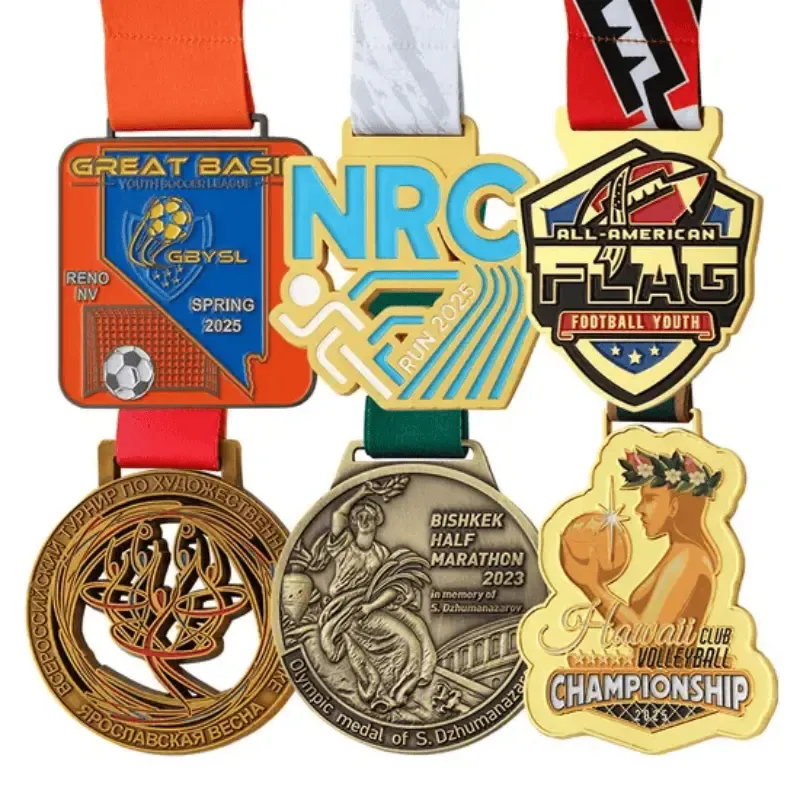
Die Struck vs Die Cast: Which Process Suits Your Medal or Pin?
Choosing between die struck vs die cast is really a question about shape. One route presses flat sheet metal between two hardened dies. The other injects molten zinc alloy into a steel mould and lets it set. Both produce medals and pins you would be glad to hand to a winner or a customer. They just get there along different roads, and most of the time your artwork picks the road for you.
We have spent over 40 years forming metal this way, and the honest answer is that neither process is the better one. They are simply good at different jobs.
The two processes in plain terms
Die struck starts with a sheet of copper, brass or iron. A punch and a die are cut with your design, a press drives them together, and the metal flows into the cavity. Nothing melts. The metal is squeezed and work-hardens as it forms, so fine lines stay sharp and the finished piece feels dense. The wider family is called stamping, and that article explains the tooling side well.
Die cast, or zinc alloy die casting, melts the alloy and forces it into a steel mould under pressure. The alloy is usually a Zamak grade, meaning zinc with small amounts of aluminium, copper and magnesium for strength and castability (die casting, Zamak). The metal fills every engraved pocket, then cools in seconds. Sculpted figures, thick rims, pierced outlines and deep relief all come out of the same mould.
That is the whole difference in one line. Struck metal is displaced. Cast metal is injected.
Detail, relief and 3D shapes
If your design lives or dies on thin type, hairline outlines or a small logo, die struck usually wins. Pressed metal holds an edge that a casting can soften slightly. That crisp raised line around a colour field is exactly what makes a struck enamel pin look expensive.
Die cast wins on depth. A mould can carry a full 3D figure, a hollow reverse, a heavy bevelled rim or a sculpted face. Cast parts also need a slight draft so they release from the mould, which is why sloping sides and rounded blocks sit naturally in a cast design. Struck relief is more limited. Push a strike too deep and you may need more than one press pass and a softer metal, and undercuts are basically off the table.
Our craft notes describe stamped soft enamel as a good fit for 3D cubic designs and fine detail, and cast zinc alloy as the low-cost route to complex shapes. Both are true, and they overlap more than most buyers expect.
Weight, thickness and the feel in the hand
Brass and copper are denser than zinc alloy (brass is mostly copper and zinc, and it is noticeably heavier than a cast alloy of the same volume). A struck coin and a cast piece of the same diameter and thickness do not weigh the same. The struck one feels heavier and rings higher when you drop it. Many buyers notice that before they notice anything else.
Cast pieces can be made thick, and they can be hollowed at the back to control weight and cost. A chunky 3D medal with a hollow reverse looks substantial on a lanyard without pulling the shirt forward. A struck medal is solid because the metal was there to begin with.
Cut-outs, holes and odd silhouettes
This is where the two processes separate fast. In die casting, the outline and any holes are built into the mould, so a star-shaped medal with a pierced centre costs no more in tooling than a round one. In stamping, the outer shape needs a cutting die, and internal cut-outs need extra tooling on top. On a simple flat pin that extra cost is easy to swallow. On a multi-part design it adds up.
The cutting stage in our production process covers exactly this: laser or hydraulic cutting, cutting dies made to the contour, and internal cuts tooled separately.
Finish and colour options
Plating choice is the same on both sides of the fence. Gold, nickel, copper, bronze, antique and satin finishes are standard across our medal and badge work, and the base metal list runs from zinc alloy through copper and brass to iron and stainless steel.
Hard enamel is the premium route. Each colour is hand filled with a glass-like powder and fired on its own, one colour at a time, at 1,700 F for two to four minutes, then the piece is polished flat and plated. It is slow and it costs more. It also gives you a surface you can run a fingernail across without feeling a step. Soft enamel is filled and baked, so the colour sits below the raised metal lines. Printed options cover gradients and photographic artwork. And there is always the no-colour route, where sandblasting, matte, two-tone and antique finishes do all the work.
Both processes take enamel. Die struck pins are the classic home for hard enamel because the recesses are crisp and even. Die cast medals often use enamel in the recesses and leave the sculpted relief as bare metal, which is why a cast medal can look both sculptural and colourful.
Cost tendencies, and why you should still get both quotes
| What you are comparing | Die struck | Die cast |
|---|---|---|
| Base metal | Copper, brass or iron sheet | Zinc alloy (Zamak) |
| Tooling | Stamping die, plus a cutting die for shaped outlines | Steel mould, one tool covers shape and relief |
| Detail at small size | Very sharp | Good, edges slightly softer |
| Depth and 3D | Shallow to moderate relief | Deep relief, figures, undercuts, hollow backs |
| Weight for the same size | Heavier, denser metal | Lighter, can be thickened or hollowed |
| Cut-outs and holes | Extra tooling | Built into the mould |
| Colour | Hard enamel, soft enamel, printing | Enamel, painting, printing, bare metal relief |
| Tooling cost tendency | Lower on flat 2D designs | Higher up front, more shape for the money |
| Unit cost tendency | Driven by metal price | Cheaper metal, more shape per gram |
Treat those as tendencies, not quotes. A heavy brass strike with a custom cut and hard enamel in six colours can cost more than a simple cast piece, and a cast mould with a sliding core can cost more than a basic stamping die. Ask for the same artwork quoted both ways and compare total landed cost including the tool.
One more thing worth checking. Re-orders of the same design carry no mould fee with us, and we keep moulds for two years, so a higher tooling number hurts once rather than every season.
Which products usually go which way
- Challenge and commemorative coins. Struck brass is the tradition for a reason: crisp type, dense feel, a clean ring. Have a look at our die struck challenge coins for the reference look.
- Race and sports medals. Cast zinc alloy for sculpted figures and chunky shapes, such as this 3D judo figure medal. Struck brass for flat classic designs. Most of the custom medals we quote can run either way, including the Fiesta event medals.
- Lapel pins. Struck pins with hard or soft enamel for fine detail and small logos. Cast for shaped novelty pins and deep 3D character work. Our custom lapel pins cover both.
- Keychains. Cast when the charm is a 3D object or a bottle-opener combo, struck when it is a flat coin-style tag. See the range in metal keychains.
- Belt buckles. Almost always cast. Large, thick, sculpted pieces are not a stamping job. Our decorative metal belt buckles are a typical example.
A short checklist before you approve a quote
- Metal and thickness, written in millimetres, not left as standard.
- Single-sided or double-sided relief.
- Is the outline included in the tooling price, and are internal cut-outs quoted extra?
- Plating type, and whether the gold is real gold or a bronze substitute. Our iron pins often use bronze plating in place of gold to keep unit price down.
- Colour method and the exact number of colours.
- Attachment: butterfly clutch, safety pin, magnet, split ring or lanyard ring.
- Sample approval before mass production, plus packaging and labelling.
- Reorder terms: mould fee and how long the mould is kept.
If a supplier cannot answer items three and eight in writing, walk away. Those are the two that decide what your second order costs.
How to start an order with us
Send your artwork and we will tell you which process gives you the better result. Adobe Illustrator or CorelDRAW files are ideal, with colours set as Pantone Solid Coated so the enamel and plating match what you approved. Design work and a proof are free.
Sampling usually takes 3 to 8 days, and bulk production runs 7 to 15 days depending on the item. Custom orders are accepted regardless of order size, so a small club run and a full event programme go through the same flow. Our own plating line sits in-house, with pollution treatment systems in place and a Green Label Enterprise award from the local government, and we are a SEDEX 4-Pillar member. Payment is by T/T, L/C or PayPal.
Email [email protected] or message +86 181 2281 1289 on WhatsApp. You can also read the full 12-step breakdown on the process page or browse custom medals and custom lapel pins first.
Frequently asked questions
Is die struck better than die cast?
Neither is better in the abstract. Die struck gives sharper lines, denser metal and a heavier feel, which suits coins and detailed pins. Die cast gives depth, sculpted 3D shapes and cut-outs built into the mould, which suits medals, shaped pins and keychains. Match the process to the design rather than the other way round.
Can die cast medals be filled with enamel?
Yes. Cast zinc alloy medals are regularly filled with hard, imitation hard or soft enamel, and often left with bare metal relief for contrast. Cast recesses can be deeper and wider than struck ones, so ask your supplier how the colour will sit before you approve the artwork.
Which is cheaper, die struck or die cast?
It depends on the design, not the process name. Die casting uses cheaper base metal but usually needs a more expensive steel mould. Die striking uses denser copper, brass or iron, though tooling on a simple flat shape can be lower, and cut-outs add a second die. Get the same artwork quoted both ways with tooling included.
How long does sampling and production take?
With us, samples usually take 3 to 8 days and bulk production 7 to 15 days depending on the item. Artwork and a proof are confirmed first, so have your vector file and Pantone references ready before the clock starts.