
Lanyard Size Guide: Widths, Lengths and Attachments Explained
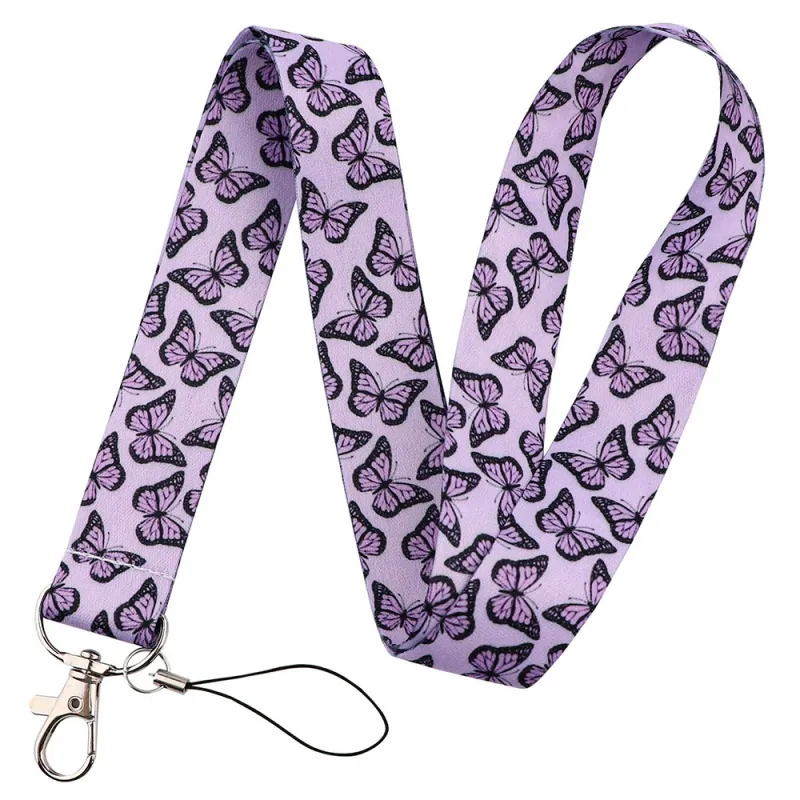
Getting the lanyard size right comes down to three numbers: webbing width, webbing thickness and the length of the finished loop. Miss on any of them and the badge your staff wear every day feels flimsy, the logo on your event strap blurs into the weave, or the strap will not clear a ponytail. Hit all three and nobody thinks about the lanyard at all. That is exactly the point.
We make lanyards in our own factory, and this guide is the short version of what our technical notes cover. Treat it as a spec sheet you can hand to any supplier, including us.
What "standard lanyard size" means in practice
Most lanyards sold to offices, events and schools sit in a narrow band. Webbing width runs from 10 mm to 35 mm, with 20 mm as the volume seller. Thickness runs 0.8 mm to 1.5 mm. The standard loop measures 90 cm in circumference, which works out at 45 cm when the lanyard is folded and worn around the neck.
Those figures are conventions, not laws. Length, width and special sizes can all be customized, and a phone or wrist strap is a different product with a different spec. Our custom lanyards range covers neck straps, short mobile straps and safety variants.
Why 90 cm? Because it clears a jacket collar and still leaves the badge at chest height, roughly where your hand naturally reaches. It is one of those numbers nobody argues with until they try to wear a 70 cm strap over a winter coat.
The five standard widths, and who they suit
Width is the number buyers get wrong most often. It drives logo legibility, hand feel and cost, in that order. Here is how our workshop tends to match width to end use:
| Width | Logo space | Usually chosen for |
|---|---|---|
| 10 mm | One short word or a compact mark | Phone straps, key straps, campus cards for younger children |
| 15 mm | A single-line logo, clean and readable | Office ID badges, staff passes, small conferences |
| 20 mm | Two-line lockups, wider marks | The default for trade shows, HR badge programmes, school lanyards |
| 25 mm | Logo plus a short tagline or event date | Retail promotions, sports events, sponsor branding |
| 35 mm | Full-width artwork, illustrations, dense type | Festivals, VIP and guest straps, merchandise ranges |
If your artwork carries a full company name, a registered mark and a website, 15 mm will fight you. Step up to 20 mm. If it is a cartoon mascot with six colours, go to 25 mm or 35 mm so the details survive.
How lanyard width affects logo legibility
Printed artwork needs room to breathe. A 10 mm strap gives you roughly the inked height of a pencil line, so any letterform with interior detail collapses into a blob at arm's length. That is not a supplier problem. It is physics.
Screen printing, the workhorse method for solid corporate logos, holds saturated colour and wears well, but it has limits on fine small text and cannot produce gradients. Heat transfer and dye sublimation handle multicolour artwork and soft gradients on a flat surface, which is why they suit event graphics and mascots. Woven jacquard builds the design into the webbing itself, so it cannot peel or rub off, though the plate-making cycle is longer and gradients are off the table.
A practical test: print your logo on paper at 60 percent of the final strap width and hold it at arm's length. If you cannot read the words, the lanyard cannot fix that. Simplify the mark for narrow widths or buy more millimetres.
Lanyard length: 90 cm, 45 cm, and everything else
The standard loop is 90 cm around, so 45 cm per side when worn. That fits most adults over a shirt. Two situations justify a change. Wearing over bulky outerwear pushes the badge too high, so add 5 to 10 cm. A lanyard for children or for a card that should sit at waist level on a clip needs a shorter loop.
Short straps exist for a reason too. Phone lanyards and fabric key straps are a separate category with their own dimensions, and they sell well as add-ons to a pin or keychain order. You can see the format in this short lanyard mobile strap we produced.
One note on how length is measured. Circumference is the finished loop, laid flat and doubled. If your supplier quotes a cut length instead, the numbers will not match your tape measure, so confirm which one is being quoted before you approve the sample.
Thickness, stitching and breaking strength
Webbing thickness sits between 0.8 mm and 1.5 mm, and the difference is tactile. Thin webbing curls at the edges and feels papery against the neck. Heavier webbing holds its shape, sits flatter and makes a printed lanyard look like a real piece of merchandise rather than a giveaway.
Regular lanyards are finished with double-line reinforced stitching at the joints, which is where failure usually starts. Standard lanyards can reach a breaking strength of 120 N and above. That number matters less than you might think for a badge that weighs almost nothing. The load case is a yank: someone catches the strap on a door handle and pulls. A reinforced joint and a decent hook handle that far better than extra webbing thickness.
Which brings up the safety question. For schools, site visitors and anywhere a strap could snag on machinery, specify a breakaway buckle. We covered the mechanics in our guide to breakaway lanyards.
Attachments: match the clip to the job
This is the part of a lanyard spec that gets the least attention and causes the most complaints. The accessories list is longer than most buyers expect:
- Metal hook or swivel hook. The default. Holds an ID holder or badge clip, rotates to stop the strap twisting.
- Plastic lobster clasp. Cheaper, lighter, fine for low-strain badges and giveaways.
- Safety breakaway buckle. Releases under load. Standard for schools and industrial sites.
- Retractable reel. Lets the card extend for a door reader without removing the lanyard.
- ID badge clip or strap clip. For punched cards with no holder.
- Carabiner, whistle, LED light. Function add-ons for outdoor, sport and safety programmes.
A metal hook costs more than a plastic clasp and lasts considerably longer. For an annual staff badge programme, that is the right trade. For a one-day conference giveaway, plastic is fine and cheaper. Order the attachment that matches the wearer's daily routine, not the cheapest line on the quote.
Materials and print methods in plain terms
Heat transfer webbing is the workhorse: tight weave, UV and wash resistant, flat edges that resist fuzzing, and the best cost per unit at volume. Nylon webbing is the upgrade. It is tougher, survives repeated bending, feels soft on the neck and carries a slight sheen that reads as premium. It also costs more, so reserve it for client-facing or long-life programmes. Polyester and nylon are the two base fibres behind almost every lanyard you have ever worn, and they behave differently in sunlight, moisture and abrasion.
Hollow or tubular webbing is woven as a single double-layer tube, thicker at the same width, with rounded edges that do not dig in. Jacquard webbing weaves the design in during production, so it survives hard wear. High-speed shuttleless looms turn out flat, clean-edged webbing in polyester, nylon or polypropylene for solid colours and simple stripes.
On the print side, the choice is usually screen printing for one or two solid colours, dye sublimation for multi-colour graphics and photos, and woven jacquard when you want the pattern to be permanent. The wider the strap, the more the print method shows its quality. A gradient that looks smooth on 25 mm can look coarse on 10 mm. If you want to understand how artwork moves from file to finished product, the production process page walks through the twelve steps.
Quick spec checklist before you request a quote
| Spec | Common choice | Ask yourself |
|---|---|---|
| Width | 20 mm | Does my logo have fine detail or small text? |
| Thickness | Around 1 mm | Will it be worn daily, or for one weekend? |
| Length | 90 cm loop | Worn over a shirt, a hoodie or a coat? |
| Material | Heat transfer webbing | Is this a giveaway or a keeper? |
| Print method | Screen or sublimation | How many colours, any gradients? |
| Attachment | Metal hook | Is a breakaway buckle required? |
| Quantity | Whatever you need | Spares for lost badges? Add 5 to 10 percent. |
Send the answers with your artwork in AI or CorelDRAW format and Pantone Solid Coated colour references, and a supplier can quote accurately instead of guessing.
How to start an order with us
Yiwu TianYao Craft Co., Ltd. produces custom lanyards, metal badges, medals, keychains and patches for brands, event organisers, clubs and distributors. Small orders are welcome, designs are free, and samples go out before bulk production so you can check the width in your hand before committing.
- Email your artwork, target width, length and attachment preference to [email protected], or message +86 181 2281 1289 on WhatsApp.
- We send a free design proof for approval. Samples usually take 3 to 8 days.
- Once the sample is signed off, production runs 7 to 15 days depending on the item and quantity.
- Every order is checked before it leaves the factory, then ships by express courier for small or urgent runs, or by air and sea freight for larger volumes.
Payment is by T/T, L/C or PayPal. If you are still sketching out the project, the contact page is the fastest way to reach a salesperson, and our team replies within 8 hours. Say what the lanyards are for and roughly how many you need. We will tell you honestly whether 15 mm or 25 mm will make your logo look better.
Frequently asked questions
What is the standard lanyard size?
The most common spec is 20 mm wide webbing with a 90 cm circumference, which gives 45 cm of drop when worn around the neck. Thickness usually falls between 0.8 mm and 1.5 mm. Widths of 10, 15, 25 and 35 mm are also standard, and length can be customized.
How do I choose lanyard width for my logo?
Narrow widths suit short names and compact marks. A 10 mm strap holds one short word, 15 mm suits a single-line logo, 20 mm handles two lines, and 25 to 35 mm gives room for taglines, mascots and detailed artwork. Print your logo at 60 percent of the final width and view it at arm's length as a test.
Will a standard lanyard fit over a jacket?
Often not comfortably. A 90 cm loop sits at chest height over a shirt, but bulky outerwear pushes the badge up. Adding 5 to 10 cm of length is the usual fix, and custom lengths are available.
Do you offer breakaway lanyards and other safety fittings?
Yes. Safety breakaway buckles, metal hooks, plastic lobster clasps, retractable reels, badge clips, carabiners, whistles and LED lights are all available as attachments, so the lanyard can be matched to the wearer and the environment.